
Recovery Isn't Just Physical: The Research Behind Psychophysiological Recovery for Athletes
Published:
Written by: TheoryEx, led by Susie Reiner, PhD, MS, CSCS, Science Contractor, Performance
Reviewed by Therabody Scientists: Tim Roberts, MSc, CSCS, Chief Science Officer; Rachelle Reed, PhD, MS, ACSM-EP, Head of Research & Science Communication
Expert contributor: Robin Thorpe, PhD, Therabody Advisory Board
You slept well. You ate enough. You stretched, foam rolled, and used your favorite recovery tools. Your muscles feel fine, but when it is time to train again, you still feel drained.
Recovery goes beyond what happens in your muscles. Mental stress, mood, cognitive fatigue, and how recovered you feel interact with physiological processes throughout the body. Together, these responses shape your overall recovery and readiness to perform.
Performance scientist Robin Thorpe, PhD, a Therabody® Scientific Advisory Board member, describes this relationship as psychophysiological recovery. In a new article published in the Journal of Science and Medicine in Sport, Dr. Thorpe and co-author Suzana Russell, PhD, demonstrate that physical and psychological recovery are interdependent parts of the same recovery process. [1]
Understanding that connection may change how you approach recovery. Here’s what psychophysiological recovery means, why your mind and body influence one another after stress, and how to build a recovery routine that supports both.

What is psychophysiological recovery?
Psychophysiological recovery describes how the physiological and psychological processes involved in recovery interact with and influence one another. [1]
Physiological recovery includes changes to your muscles, nervous system, cardiovascular system, and metabolic processes as your body responds to and recovers from exercise. Psychological recovery involves changes in mental fatigue, emotional stress, mood, and perceived readiness. Although often discussed separately, Thorpe and Russell demonstrate they are interdependent parts of the same recovery process. [1]
Athletes may seem physically recovered but still face substantial mental or emotional stress that can hinder performance or even increase injury risk. [4] Psychological recovery can also be harder to recognize, which is one reason it has been called “the forgotten session” in sport. [1, 2, 3]
“Subjective and behavioral information is very important. Ultimately, no single marker tells us an athlete is psychologically recovered, so physical and psychological signals need to be interpreted together to understand an athlete’s broader recovery context,” says Thorpe.
Why are physiological and psychological recovery connected?
Your brain and body constantly exchange information about stress, fatigue, and recovery. How you feel, think, and perceive fatigue can influence physiological responses, while changes occurring in your body can influence stress, mood, and how recovered you feel. Thorpe and Russell describe this two-way relationship as psychophysiological interdependence. [1]
“How an athlete feels, thinks, and perceives fatigue interacts with autonomic, endocrine, and physiological responses, so recovery is better understood as an integrated psychophysiological process,” Thorpe says. Targeting both systems in your recovery routine may lead to faster, more profound recovery than physical or mental protocols alone. [1]
The autonomic nervous system has sympathetic and parasympathetic branches. Its sympathetic branch helps your body respond to physical and psychological demands, while parasympathetic activity helps regulate the return to baseline following stress and exercise. [5, 6]
Because both physical and psychological inputs can influence autonomic activity, recovery strategies can work across both the mind and body.

How does this change the way you recover?
Recovering with psychophysiological interdependence in mind could look like a mental recovery strategy that produces a physiological response, or a physical recovery strategy that can influence how you feel.
For example, imagine putting your feet up after a hard run and spending a few minutes focusing on slow, controlled breathing. Although breathwork may feel like a mental recovery strategy, it also produces physiological changes. Slow breathing can reduce heart rate and physiological arousal and increase measures associated with parasympathetic activity, helping your body transition toward a calmer post-exercise state. [9, 10, 11, 12]
The relationship can work in the other direction, too. Physical recovery strategies may change how you feel. Percussive massage, compression, heat, and vibration can influence physical outcomes such as soreness, pain, muscle tension, or circulation. [7, 8] Feeling less sore or physically tense may, in turn, contribute to feeling more relaxed and recovered.
You can use this two-way relationship when building your own recovery routine. Instead of adding more recovery time to your day, consider strategies that support both sides of recovery or pair physical and psychological techniques together.
How can you build a recovery routine that supports the body and mind together?
The foundational layer of the recovery pyramid includes getting consistent sleep, quality nutrition and hydration, and appropriate training load. [13, 14, 15, 16] Once you master these, layer in tools that can further help the mind and body reset.
Practice intentional breathing
Slow, controlled breathing is one of the fastest ways to calm the nervous system. [9] Studies consistently show that conscious, slow breathing at a rate of around 6–10 breaths per minute slows your heart rate, increases heart rate variability, and reduces blood pressure — all clear indicators of increased parasympathetic activity. [9, 12] Breathing exercises can help bring your mind to a meditative, calm state and have been shown to reduce anxiety and improve mood and stress levels. [9, 10]
An easy way to start practicing breathwork is box breathing, a well-established technique shown to improve mood. [17] This follows a simple pattern:
- Breathe in for four seconds
- Hold your breath for four seconds
- Breathe out for four seconds
- Hold your breath for four seconds
- And repeat
Imagine your breath moving around the edge of a box, and every time you reach a corner, move to the next step.
For more benefits of breathwork and ways to implement it, check out this article: The Benefits of Breathwork and How to Get Started With Simple Breathing Exercises
Also, check out TheraMindTM in the Therabody App, which includes guided breathwork sessions.

Incorporate vibration recovery devices
Vibration is another tool that can calm your muscles and mind in a variety of ways. Vibration applied to your muscles using tools like WaveRoller® has been shown to reduce pain and muscle tension, improve heart rate variability, and increase overall parasympathetic activity. [18, 19, 20] SmartGoggles® apply vibration around the eyes and has been shown to improve sleep (one of our best recovery tools) and reduce stress and anxiety. [21, 22]
Prioritize your sleep
Sleep is your best weapon against fatigue and helps the body and mind recover. Keeping a consistent sleep schedule, wind-down routine, and a dark, cool, quiet environment helps your body’s natural rhythms flip the switch to recovery mode. [16] A recent study also showed that using Therabody SleepMask improved sleep quality and duration, supporting mental and physical recovery.

Fuel your body and mind
Nutrition supports muscle recovery and replenishes energy stores. Prioritizing meals built around high-quality protein and carbohydrate sources before and after demanding training days, along with consistent hydration throughout the day, is critical to reaping the physical benefits of your training. [23, 24]
Eating delicious food and sharing meals with friends and loved ones also have major psychological benefits, often shown to improve your mood, reduce mental load, and support overall relaxation. [25, 26]
Pair physical and mental techniques together
Adding extra recovery sessions throughout the week may sound difficult. Fortunately, you don’t have to, because pairing physical and mental recovery techniques together is just as effective as doing them separately.
Some easy pairings of physical and mental techniques might include:
- Sauna + meditation
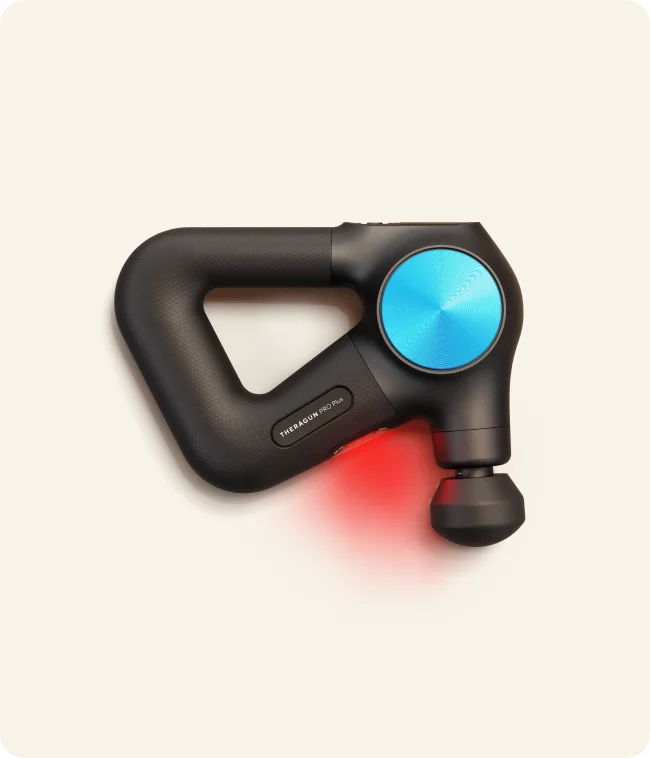
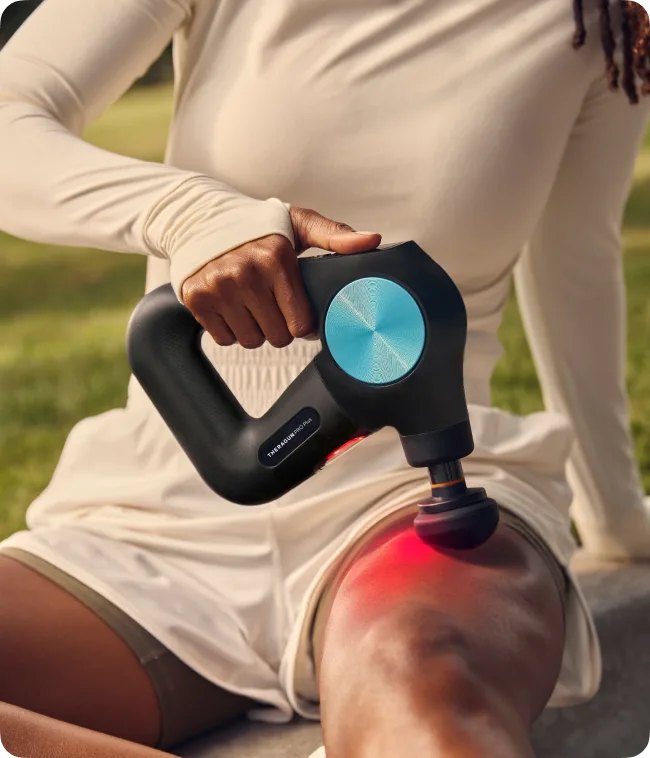
- Theragun® percussive massage + progressive muscle relaxation
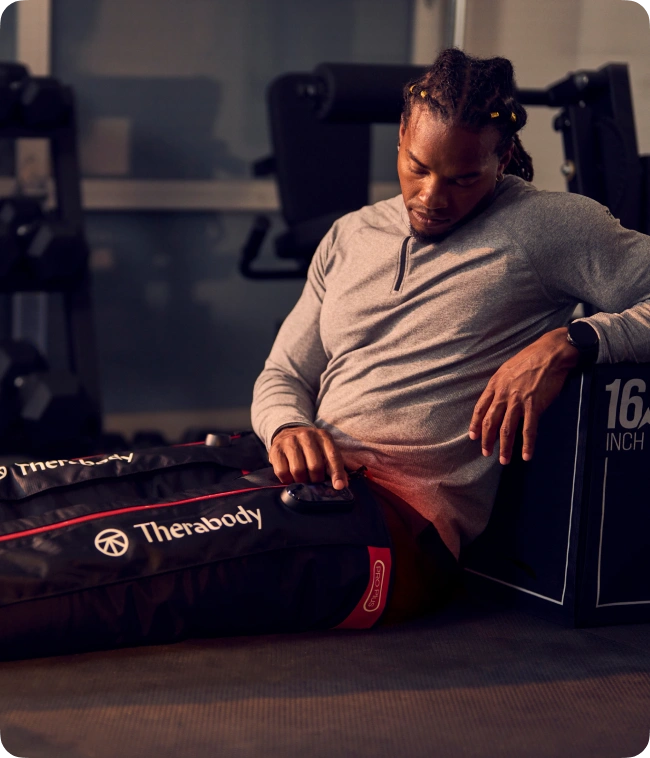
- JetBoots® pneumatic compression + journaling
- Heat with ThermBack LED + stretching + breathwork
Different pairs of physical and mental recovery tools can create a synergistic effect that further drives relaxation and helps you feel fresher physically and mentally.

Find what works for you
Perhaps most importantly, finding physical and mental recovery techniques that work for you is far more important than going with what you heard works for someone else. “The challenge is to select interventions with a credible physiological rationale while also recognizing that athlete preference, belief, and the recovery experience itself can influence the overall response,” Thorpe explains. Expectation, belief, and perceived effectiveness of different techniques may influence how well they work, so considering both the “real” physiological effect of an intervention and how an athlete feels about it is key for building a successful routine.
Key takeaways
- Physical and psychological recovery work as one connected system.
- Many physical recovery tools can help your mind relax, while calming the mind supports the body’s recovery.
- To optimize your recovery, prioritize foundational recovery tools first (sleep, nutrition, hydration, training load). Once you’ve mastered the basics, you can start to layer in additional tools that help you feel better.
- Pairing physical and mental recovery strategies into one session can help you prioritize recovery without taking too much time away from your day.
- The key to effective physical and mental recovery is different for everyone. Experiment with different physical and mental techniques to find what works well for you.
References:
- Challenging foundations and conventions: embracing psychophysiological interdependence in athlete recovery
- The effects of relaxation techniques following acute, high intensity football training on parasympathetic reactivation
- “The forgotten session”: Advancing research and practice concerning the psychology of rest in athletes
- Effect of Physical and Academic Stress on Illness and Injury in Division 1 College Football Players
- Influence of physical post-exercise recovery techniques on vagally-mediated heart rate variability: A systematic review and meta-analysis
- Cardiac Parasympathetic Reactivation Following Exercise: Implications for Training Prescription
- Putting the Squeeze on Compression Garments: Current Evidence and Recommendations for Future Research: A Systematic Scoping Review
- Local Heat Therapy to Accelerate Recovery After Exercise-Induced Muscle Damage
- The Effect of Slow-Paced Breathing on Cardiovascular and Emotion Functions: A Meta-Analysis and Systematic Review
- How Breath-Control Can Change Your Life: A Systematic Review on Psycho-Physiological Correlates of Slow Breathing
- The Effects of Mindfulness and Meditation on Vagally Mediated Heart Rate Variability: A Meta-Analysis
- Effects of voluntary slow breathing on heart rate and heart rate variability: A systematic review and a meta-analysis
- The Importance of Supporting Training With Nutrition, Sleep, and Other Recovery Techniques
- Nutrition, sleep and recovery
- Recovery and Performance in Sport: Consensus Statement
- Sleep and Athletic Performance: The Effects of Sleep Loss on Exercise Performance, and Physiological and Cognitive Responses to Exercise
- Brief structured respiration practices enhance mood and reduce physiological arousal
- Heart rate variability response to low-frequency sounds vibrations in regularly active male subjects
- The analgesic effect of localized vibration: a systematic review. Part 1: the neurophysiological basis
- Clinical efficacy of vibration stimulation therapy to relieve acute exercise fatigue
- Smart Goggles Used Before Bed to Induce Relaxation Improve Objective Sleep and Reduce Self-Reported Stress
- Effects of a Vibrating Sleep Mask on Objectively Measured Sleep: A Controlled, At-Home Study
- Position of the Academy of Nutrition and Dietetics, Dietitians of Canada, and the American College of Sports Medicine: Nutrition and Athletic Performance
- Nutritional Strategies to Improve Post-exercise Recovery and Subsequent Exercise Performance: A Narrative Review
- Breaking Bread: the Functions of Social Eating
- A scoping review on interpersonal coping in sports

Related products
-
 Sold out Sale
-
 Sold out Sale
-
 Sold out Sale